


Along with men in my family, the Army and other areas of my life, purpose-driven role models in sport, especially rowing in my case, have contributed to my understanding of masculinity. A recent experience reminded me of the importance of active opportunities for boys, especially underprivileged ones, who are increasingly susceptible to digital influence and what is commonly termed ‘toxic masculinity’.
One of the pastimes I’ve taken up in Antigua is touch rugby – as a complete novice. The one time I played rugby at school, I broke my glasses and that was the end of it! The Old Harbourians, now Antigua and Barbuda Rugby, are a welcoming bunch and they’ve showed me the ropes. I can now at least consistently receive the ball and run it down the wing for an occasional try, leaning heavily on my above-average fitness.
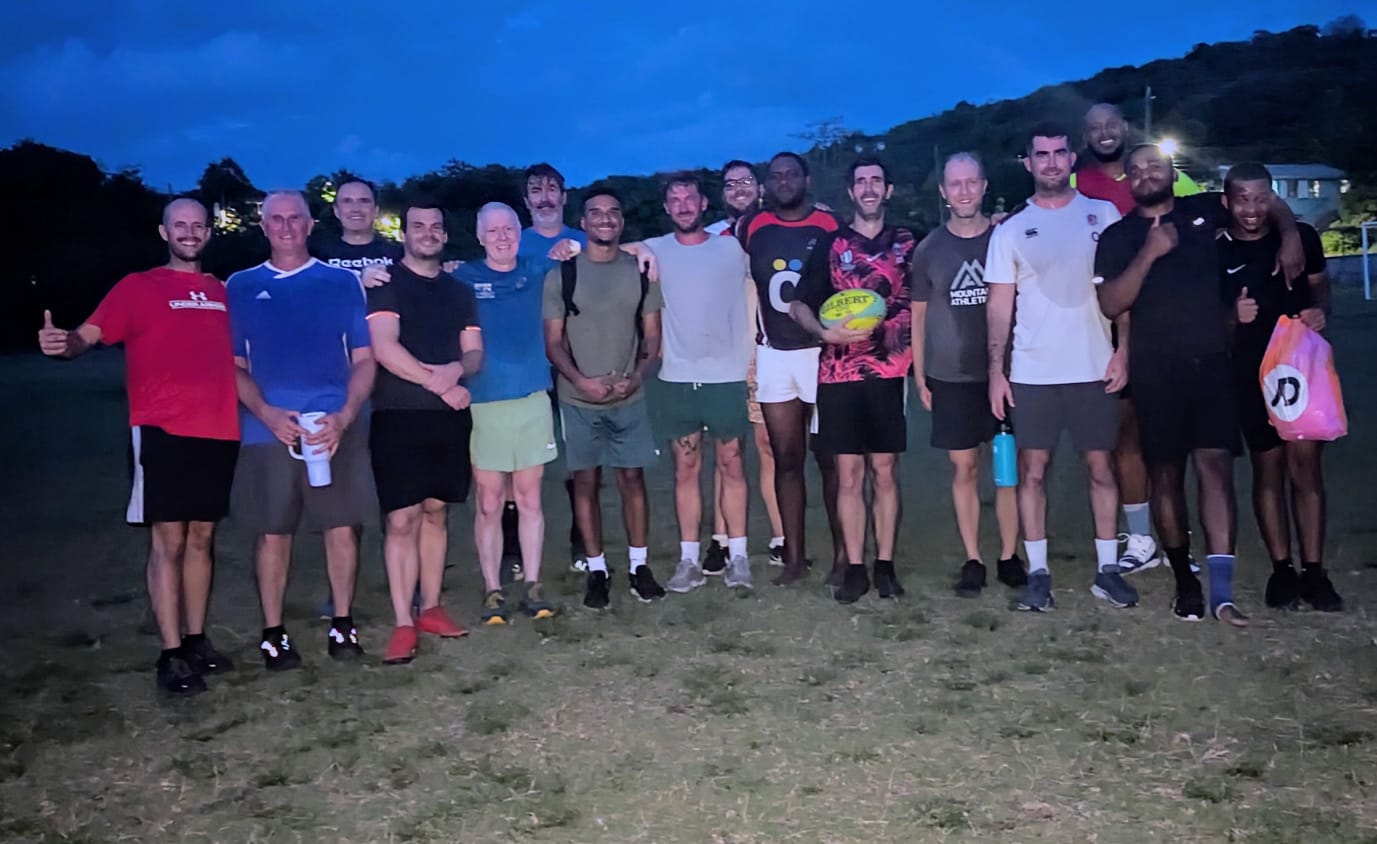
The rugby club is open to all ages and sexes, with a simplified game for under 10s, but mainly comprised of male immigrants, expats and visiting yachties, with regular representation from England, Wales, Ireland, New Zealand, Canada, South Africa, Israel and the US. There’s also a handful of Antiguan players who learned the game abroad. Our occupations include: builder, diver, medical student, engineer, estate agent, data architect, facilities manager, software developer, sailor and archaeologist.
Antigua’s national sport is traditionally cricket, while younger generations increasingly play basketball and football due to cultural influences from the US and UK. Rugby isn’t a thing for Antiguans, even to watch, at least it wasn’t until around a year ago. A Tongan-American ex NFL player and rugby sevens coach, who relocated here for work, decided to try something. What if we could get more Antiguans playing rugby?1
He approached Antigua’s top state grammar school and got permission to teach a group of boys the game. Despite going to a good school in academic terms, these early teenagers aren’t well off, many are raised by single mothers, and living in a tiny developing country means their job prospects are limited. Like underprivileged young men everywhere, they’re also vulnerable to the pernicious pressures of drugs, gangs and social media indoctrination – significantly more so than their female peers.
Coach Andy has done well in life, despite himself coming from humble beginnings, and he wants to do right by local communities here. If these young men work hard and show potential, and importantly provided they also keep up with their academic studies, he has connections ot refer them for rugby scholarships at colleges in the USA. It’s a truly transformative opportunity for them and their families.
I think some people were sceptical about the idea to begin with. As in the UK, it’s a bug bear of older generations here that the youth of today are disrespectful and unmotivated. I see what they mean, but I do wonder how much of young people’s unruly behaviour stems from how adults treat them. Parents, especially fathers, are often absent or busy working, teachers are underpaid and under pressure to make children learn content by rote, and managers of entry-level staff lack leadership skills.
So the extent to which these young men have embraced the opportunity to play rugby is inspirational to witness. I’ve not contributed to the programme; I’m simply relating what I’ve observed at training and occasionally playing them in a tournament. What’s clear is they turn up, they train with discipline, they play with passion, they help mark the pitch before games and collect the cones afterwards, they call the volunteer coaches and referees ‘Sir’; if they get sin-binned for tackling too hard or losing their temper they take it on the chin, and they politely get involved in the conversation while we drink our post-match beers at the unofficial clubhouse. They’re also, as far as I can tell, respectful to their mothers, sisters and other women they come across. I’m not suggesting they were the opposite before, but it’s obvious they’re flourishing in this environment and that the opportunity has broadened their horizons.
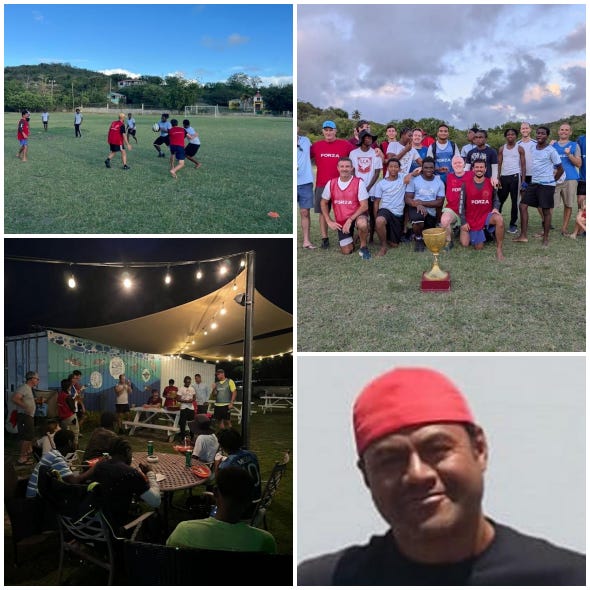
After just a few months, two of the lads are already in the running for a life-changing scholarship, with the chance of a more lucrative and fulfilling career than they’d ever have imagined. But they don’t need reprimanding, lecturing, babying or placating with a device to make them behave, and I’m pretty sure they’ve not undertaken therapy or been to workshops on non-violent communication (not knocking either of those). Beyond the clear advantage of a loving mum, it seems there’s a benefit for them in hanging out with a group of decent blokes, many of whom have children themselves, who can play a rough game fairly and have a laugh doing it, and who treat them like the young men they are. We don’t claim to be the perfect role models; off the pitch we drink, we swear, and occasionally we have a heated debate. But ultimately we’re approachable, we’re encouraging, we’re not afraid to correct them, and we pick them up when they get knocked down – I like to think we have a sound moral compass.
So when I see content about the very real problems of misogyny and violence among boys, and it’s so often couched in the jargon of psychology and safeguarding (both important disciplines), I can’t help but wonder if there’s an alternative antidote. What clearly benefits some impressionable young men is an opportunity to get off their phone and learn something purposeful in the real world, away from the classroom and in the company of responsible ordinary men who challenge and support them. This idea is far from novel, but for whatever reasons seems to be undervalued in certain circles where formal pedagogical interventions are the preference. Whether it’s rugby or rowing, painting or pottery, cadets or cookery, my guess is an activity will always be better received and more impactful than a PowerPoint about toxic masculinity. And for good men, like Coach Andy, it’s a fantastic opportunity to pay forward your success.
As for me, the next tournament’s coming up on Saturday – I’m still distinctly average but it’s always good craic. More than anything, since not everyone has the opportunity, I’ll do my best to approach it with purpose and take from it what I can.
Where do you find purpose beyond work and daily responsibilities? I’d love to hear.
https://www.antiguanice.com/client.php?id=1444&news=17025